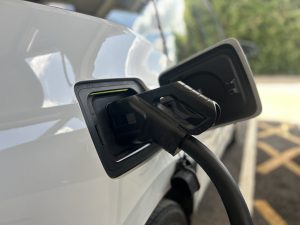

With more electric vehicles appearing on UK roads, one of the biggest questions drivers have is how much they actually cost to run. While electric cars are often described as cheaper than petrol and diesel vehicles, the reality depends on where you charge, how much electricity your car uses and the price you pay per kilowatt hour (kWh).
So, how much does it cost to drive 100 miles in an electric car in 2026, and how does that compare with petrol and diesel?
We’ve used approximate UK electricity and fuel prices to calculate what a typical 100-mile journey might cost. All figures are estimates, and actual costs will vary depending on your vehicle, driving style, weather conditions and energy prices.
How Much Electricity Does an Electric Car Use Over 100 Miles?
Before calculating the cost, it’s important to understand how much electricity an electric car might use.
Electric car efficiency is commonly measured in miles per kilowatt hour (miles/kWh). A more efficient electric car can travel further using the same amount of electricity.
For this comparison, we’ll assume an electric car uses approximately 27kWh of battery energy to travel 100 miles. Allowing roughly 10% for charging losses gives an estimated 30kWh of electricity purchased.
This is an illustrative figure rather than an average for every electric vehicle. Smaller, more efficient cars may use less electricity, while larger electric SUVs and vehicles travelling at motorway speeds may use more.
Using approximately 30kWh per 100 miles gives us a consistent starting point for comparing different charging costs.
How Much Does It Cost to Drive 100 Miles When Charging at Home?
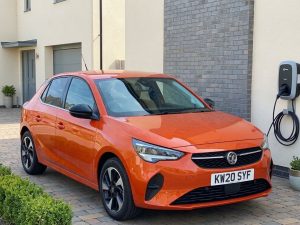
Home EV charging is often one of the cheapest ways to run an electric vehicle, particularly for drivers who can take advantage of lower overnight electricity rates.
For our comparison, we’ll use an illustrative standard home electricity rate of 26.32p per kWh.
Using our estimated electricity consumption of 30kWh per 100 miles, the calculation is:
30kWh × £0.2632 = £7.896
That means driving 100 miles in an electric car could cost approximately £7.90 when charging at home on this example standard electricity tariff.
However, some electricity suppliers offer dedicated EV tariffs with cheaper overnight charging rates.
For example, using an illustrative off-peak electricity rate of 8p per kWh:
30kWh × £0.08 = £2.40
Under these assumptions, an electric car driver could travel approximately 100 miles for just £2.40 in electricity costs.
These calculations exclude household standing charges and any costs associated with installing a home charger. Actual rates depend on the electricity supplier and tariff.
For information about UK domestic electricity prices, visit Ofgem.
How Much Does It Cost to Drive 100 Miles Using Ultra-Rapid EV Charging?
Public EV charging is particularly useful when travelling longer distances, visiting another area or when home charging isn’t available.
Ultra-rapid chargers can deliver electricity much faster than a typical domestic charger, although the actual charging speed depends on the vehicle, battery temperature and battery charge level.
For this comparison, we’ll use an illustrative public rapid and ultra-rapid charging price of 79p per kWh. This is a benchmark rather than a price charged by every public charging provider.
Using the same estimated 30kWh of purchased electricity for a 100-mile journey:
30kWh × £0.79 = £23.70
This means that driving 100 miles using electricity purchased entirely from public rapid or ultra-rapid chargers at this example rate could cost approximately £23.70.
That is considerably more than charging at home, but public charging provides the convenience of adding range during a journey without needing to return home.
Not all ultra-rapid charging networks charge the same amount. Some offer considerably lower prices, including Tap Zap Go, where our ultra-rapid charging costs 49p per kWh.
For information about public charging prices, visit the Zapmap charging price index.
How Much Does It Cost to Drive 100 Miles in a Petrol Car?
To compare electric cars with traditional vehicles, we also need to consider how much petrol a typical car might use over the same distance.
For this example, we’ll use a petrol car achieving approximately 45 miles per gallon (mpg), measured using UK imperial gallons.
One imperial gallon contains approximately 4.546 litres, so travelling 100 miles at 45mpg would use:
100 ÷ 45 × 4.546 = approximately 10.10 litres of petrol.
Using an illustrative petrol price of £1.75 per litre:
10.10 litres × £1.75 = approximately £17.68.
Under these assumptions, driving 100 miles in a petrol car would cost approximately £17.68.
Petrol prices change regularly, and fuel consumption varies considerably between vehicles. A smaller, more efficient petrol car may cost less, while a larger vehicle could use significantly more fuel.
For current UK pump prices, drivers can check RAC Fuel Watch.
How Much Does It Cost to Drive 100 Miles in a Diesel Car?
Diesel cars can be particularly efficient over longer journeys, especially when travelling at consistent motorway speeds.
For our comparison, we’ll assume a diesel vehicle achieves approximately 55mpg.
To travel 100 miles, the estimated fuel consumption would be:
100 ÷ 55 × 4.546 = approximately 8.27 litres of diesel.
Using an illustrative diesel price of £2.00 per litre:
8.27 litres × £2.00 = approximately £16.53.
This gives an estimated cost of £16.53 to drive 100 miles in a diesel car.
Although diesel vehicles can offer good fuel efficiency, the overall cost depends heavily on the price at the pump and the vehicle’s actual fuel consumption.
Electric vs Petrol vs Diesel: Cost Per 100 Miles Compared
Now that we’ve calculated the approximate costs, here’s how the different options compare.
| Vehicle or Charging Method | Approximate Cost Per 100 Miles |
|---|---|
| Electric car, off-peak home charging at 8p/kWh | £2.40 |
| Electric car, standard home charging at 26.32p/kWh | £7.90 |
| Tap Zap Go ultra-rapid charging at 49p/kWh | £14.70 |
| Petrol car at approximately 45mpg | £17.68 |
| Diesel car at approximately 55mpg | £16.53 |
| Public rapid and ultra-rapid charging at 79p/kWh | £23.70 |
All figures are approximate and based on illustrative vehicle efficiency, fuel prices and electricity tariffs. The EV calculations use approximately 30kWh of purchased electricity per 100 miles, including an estimated allowance for charging losses.
Based on these examples, charging an electric car at home using an off-peak tariff could save approximately £15.28 per 100 miles compared with the petrol car in our calculation.
Over 10,000 miles, that would represent an estimated saving of around £1,528 in electricity costs compared with petrol, assuming the same prices and efficiency throughout.
However, the comparison also shows that public charging prices can vary considerably, making the choice of charging network important.
Save on Ultra-Rapid EV Charging With Tap Zap Go
Although charging at home is often the cheapest option, public ultra-rapid charging doesn’t always have to be expensive.
At Tap Zap Go, our ultra-rapid EV charging costs just 49p per kWh, making it a competitively priced option for drivers travelling through the areas where our chargers are located.
Using our earlier estimate of 30kWh of electricity to travel 100 miles, the calculation is:
30kWh × £0.49 = £14.70
That means driving approximately 100 miles using electricity purchased from Tap Zap Go could cost around £14.70, depending on your vehicle’s efficiency and driving conditions.
Compared with the illustrative public rapid and ultra-rapid charging rate of 79p per kWh, Tap Zap Go could save drivers approximately £9 per 100 miles.
That’s an estimated saving of around 38% on electricity costs compared with that example public charging rate.
Unfortunately, not every ultra-rapid charging provider offers prices as competitive as ours. Checking charging costs before starting a journey can make a noticeable difference to your overall running costs.
If you’re passing through Medway, Castleford or travelling near Membury Services in Lambourn Woodlands, why not make Tap Zap Go part of your journey?
As well as offering competitively priced ultra-rapid charging, we invest in renewable electricity generation through solar panels installed on buildings we own across the UK.
Our aim is to make public EV charging more affordable while supporting a greener future for electric motoring.
What Affects the Cost of Driving an Electric Car?
Just like petrol and diesel vehicles, electric cars don’t always achieve the same efficiency in every situation.
Motorway driving, cold weather, vehicle weight and driving style can all affect electricity consumption.
For example, an electric vehicle using 25kWh of purchased electricity per 100 miles would cost approximately £12.25 when charging at Tap Zap Go’s rate of 49p per kWh.
A less efficient electric vehicle using 35kWh over the same distance would cost approximately £17.15.
These examples show why there isn’t one fixed answer to how much it costs to drive an electric car. The vehicle’s efficiency and the electricity tariff both make a significant difference.
Planning your journey and checking charging prices in advance can help you manage the cost of electric motoring.
How Tap Zap Go Is Supporting Greener EV Charging With Solar Energy
While the cost of charging is important, there’s another factor worth considering: where the electricity comes from.
At Tap Zap Go, we’ve invested in solar panels installed on buildings we own across the UK, allowing us to generate renewable electricity to support our EV charging operations.
Rather than relying on solar panels installed directly beside every charger, we generate solar energy through installations across our wider property portfolio.
These solar panels convert sunlight into electricity, helping us make better use of existing rooftop space while investing in renewable energy generation.
Our approach brings together electric vehicle charging and solar energy, supporting our commitment to cleaner transport.
Although individual charging sessions may use electricity supplied through the grid, our solar installations form an important part of our wider renewable energy strategy.
For drivers, this means choosing a charging network that is actively investing in solar energy as part of its operations.
Find Tap Zap Go Ultra-Rapid EV Charging Locations
Whether you’re travelling for work, visiting family or planning a longer journey, having convenient access to public charging can make electric driving more practical.
Tap Zap Go has three EV charging locations across England, supported by our investment in solar energy generation.
Our Strood charging location is situated at the Whitewall Centre, Whitewall Road, Medway City Estate, Strood, Kent, ME2 4DZ. It’s a convenient option for drivers visiting businesses in the Medway area or travelling through Strood and Rochester.
Find out more about ultra-rapid EV charging in Strood.
In West Yorkshire, our Castleford charging location can be found on Willowbridge Lane, Castleford, WF10 5NW, near Diggerland Yorkshire. It provides a useful charging stop for local drivers and visitors to the area.
Find out more about ultra-rapid EV charging in Castleford.
For drivers travelling along the M4, our Membury charging location is situated beside westbound Membury Services, Lambourn Woodlands, Hungerford, Berkshire, RG17 7TJ.
Find out more about ultra-rapid EV charging near Membury Services.
With ultra-rapid charging available at 49p per kWh, Tap Zap Go offers a competitively priced option for drivers passing through these locations.
Is It Cheaper to Drive an Electric Car Than a Petrol or Diesel Car?
Based on our approximate calculations, electric cars can be considerably cheaper to power than petrol or diesel vehicles, particularly when drivers have access to affordable home charging.
Using an illustrative off-peak electricity rate of 8p per kWh, travelling 100 miles could cost around £2.40 in an electric car, compared with approximately £17.68 in our petrol example.
However, the cost advantage changes when relying on public ultra-rapid charging. Using an illustrative rate of 79p per kWh, the same 100 miles could cost approximately £23.70.
At Tap Zap Go, our 49p per kWh ultra-rapid charging rate brings that estimated cost down to approximately £14.70 per 100 miles, making it cheaper than the petrol and diesel examples used in this comparison.
Of course, electricity and fuel aren’t the only costs involved in owning a vehicle. Purchase price, insurance, maintenance, depreciation and vehicle taxation should also be considered when comparing overall running costs.
For many drivers, the most practical approach is to charge at home when possible and use public charging when travelling further afield.
At Tap Zap Go, we’re helping support those journeys with competitively priced ultra-rapid EV charging locations in Strood, Castleford and beside Membury Services, alongside our investment in solar panels on buildings we own across the country.
So, if you’re passing one of our three charging stations, why not stop by and charge your electric vehicle for just 49p per kWh?
All information known to be correct at the time of publishing on 28th October 2026.