So a common question is, does using the heating in an electric car reduce its range? Well, using the heating in an electric car can reduce its driving range, particularly during the colder winter months. However, the amount of electricity your heating system consumes depends on several factors, including the outside temperature, your vehicle’s technology and the length of your journey.
As temperatures drop across the UK, many electric vehicle drivers wonder how much of their battery is being used to keep them warm. Is turning up the heating significantly reducing your range? Are heated seats more efficient? And can you stay comfortable without needing to charge more frequently?
Fortunately, there are several ways to manage your electricity consumption without sacrificing comfort. In this guide, we explain how electric vehicle heating works, how it affects battery range and how you can keep your winter driving costs down.
How Does Heating in an Electric Car Work?
Electric cars heat their interiors differently from traditional petrol and diesel vehicles.
In a petrol or diesel car, the combustion engine generates a considerable amount of waste heat. The vehicle can use some of this heat to warm the cabin while the engine is running.
However, electric motors produce less waste heat. As a result, electric vehicles generally rely on electric heating systems or heat pumps to keep passengers warm.
While driving, these systems use electricity from the vehicle’s battery. Therefore, some of the energy that could otherwise power the wheels is used to heat the cabin instead.
One advantage of electric vehicles is that many can begin heating the cabin without waiting for an engine to warm up. This can be particularly useful on cold winter mornings.
Furthermore, many modern electric cars feature advanced climate control systems designed to maintain a comfortable temperature while managing electricity consumption.
So Does Using the Heating in an Electric Car Reduce Its Range and How Much Range Does Heating in an Electric Car Use?
There is no fixed amount of range that an electric car loses when the heating is switched on. Electricity consumption varies depending on the vehicle, heating system, outside temperature and desired cabin temperature.
However, we can use some approximate calculations to demonstrate how additional heating consumption might affect driving range.
Imagine an electric car with a usable battery capacity of approximately 60kWh and a driving efficiency of 3.5 miles per kWh, before accounting for additional cabin heating.
Under these illustrative conditions, the vehicle could achieve approximately 210 miles of driving range.
If the heating system consumes an additional 2kWh during a journey, that electricity could otherwise provide approximately seven miles of driving range.
Similarly, if the heating consumes an additional 4kWh, this could represent approximately 14 miles of potential driving range.
| Additional Heating Consumption | Approximate Potential Range Used |
|---|---|
| 1kWh | 3.5 miles |
| 2kWh | 7 miles |
| 3kWh | 10.5 miles |
| 4kWh | 14 miles |
| 5kWh | 17.5 miles |
All figures are approximate and based on an assumed driving efficiency of 3.5 miles per kWh. They illustrate the potential range associated with different amounts of electricity rather than predicting how much electricity your heating system will consume.
Actual results will vary depending on your electric vehicle, weather conditions, journey length and heating settings.
Does Heating in an Electric Car Use More Electricity in Winter?
Generally, electric car heating systems need to work harder when outside temperatures are particularly low.
For example, warming a freezing cabin on a January morning will usually require more energy than maintaining a comfortable temperature on a mild autumn afternoon.
Once the cabin reaches the desired temperature, the heating system may require less electricity to maintain it.
However, heating is not the only reason electric cars can experience reduced range during winter.
Cold temperatures can temporarily affect battery performance. Additionally, some electric vehicles use electricity to warm their batteries and maintain suitable operating temperatures.
Wet roads, lower tyre pressures, stronger winds and denser cold air can also increase electricity consumption.
Consequently, the reduction in electric car range during winter is often the result of several factors working together, rather than cabin heating alone.
Understanding these differences can help you plan longer journeys and manage your charging requirements more effectively.
Do Heat Pumps Make Heating in an Electric Car More Efficient?
Many modern electric vehicles feature heat pumps to improve heating efficiency and help preserve battery range.
A conventional electric resistance heater converts electricity directly into heat. In comparison, a heat pump transfers thermal energy from available sources to warm the cabin.
This process can often use less electricity than traditional electric heating.
As a result, electric cars equipped with heat pumps may experience a smaller reduction in range when using the heating. However, their effectiveness depends on the outside temperature and the vehicle’s design.
Some manufacturers include heat pumps as standard, while others offer them as an optional extra.
If you are considering purchasing or hiring an electric vehicle, it is worth checking whether your chosen model includes a heat pump, particularly if you regularly travel during winter.
Our sister company, EVision Electric Vehicles, offers a wide range of electric vehicles available to hire from one day to three years or more.
Hiring an electric car can be a great way to experience different vehicle technologies before deciding which model best suits your needs.
How to Use the Heating in an Electric Car More Efficiently
There is no need to sit in a freezing electric car simply to preserve battery range. Instead, a few practical adjustments can help you stay warm while managing electricity consumption.
Precondition Your Electric Car Before Leaving
Many electric vehicles allow drivers to warm the cabin before starting a journey. Depending on the vehicle, you may be able to do this through a smartphone app or scheduled departure settings.
If your electric car is plugged into a suitable charger, preconditioning can use electricity from the charging supply rather than relying entirely on the battery.
Therefore, you could begin your journey with a warm cabin and more battery energy available for driving.
This is particularly useful on cold mornings when the heating system would otherwise need to work harder.
Use Heated Seats and Steering Wheels
If your electric car features heated seats or a heated steering wheel, these can be useful during colder weather.
Rather than heating the entire cabin, these features provide warmth directly to the driver and passengers.
In many circumstances, they can use less electricity than increasing the cabin temperature significantly.
Combining heated seats with a comfortable cabin temperature may therefore help improve overall heating efficiency.
Choose a Comfortable Temperature
Setting your heating to its maximum temperature is not always necessary.
Instead, choose a comfortable cabin temperature and allow your vehicle’s climate control system to maintain it.
However, safety should always come first. Never switch off essential heating, demisting or windscreen clearing functions simply to preserve battery range.
Check Your Tyre Pressures
Although tyre pressures are not directly related to cabin heating, they can affect your electric car’s overall efficiency.
Tyre pressures can decrease during colder weather. Underinflated tyres can increase rolling resistance, meaning your vehicle needs more electricity to travel the same distance.
For this reason, check your tyre pressures regularly and follow the vehicle manufacturer’s recommendations.
Plan Your Charging Stops in Advance
If you are travelling further during winter, allow for potentially higher electricity consumption.
Planning your charging stops before leaving can help you avoid unnecessary range anxiety and make your journey more enjoyable.
Additionally, choosing a competitively priced public charging network can help keep your winter driving costs down.
How Much Does Heating in an Electric Car Cost?
The cost of heating an electric vehicle depends on how much electricity the heating system consumes and how much you pay to recharge the battery.
At Tap Zap Go, our ultra-rapid EV charging costs just 49p per kWh.
For example, purchasing an additional 2kWh of electricity at one of our charging stations would cost approximately 98p.
The calculation is:
2kWh × £0.49 = £0.98
Similarly, purchasing an additional 4kWh would cost approximately £1.96.
| Additional Electricity Purchased | Approximate Cost at Tap Zap Go |
|---|---|
| 1kWh | £0.49 |
| 2kWh | £0.98 |
| 3kWh | £1.47 |
| 4kWh | £1.96 |
| 5kWh | £2.45 |
These figures are illustrative and based on our charging tariff of 49p per kWh. Actual heating consumption will vary between vehicles and journeys. Charging losses may also mean that slightly more electricity is required to replace the energy used.
Unfortunately, not every public ultra-rapid charging provider offers prices as competitive as ours.
Therefore, checking public charging prices before travelling could make a noticeable difference to your overall electric car running costs, particularly during winter.
Can You Use the Heating in an Electric Car While Charging?
Yes, most modern electric vehicles allow you to use the heating while the battery is charging.
This means you can remain warm and comfortable inside your vehicle while waiting for your charging session to finish.
However, running the heating during a charging session requires electricity. Depending on the vehicle and charging equipment, some of the electricity supplied by the charger may be used to maintain the cabin temperature.
As a result, this could slightly affect the amount of energy reaching the battery or the overall charging time.
Nevertheless, there is no need to sit in the cold while your electric vehicle charges. Always follow your vehicle manufacturer’s recommendations regarding climate control during charging.
Does Cold Weather Affect Ultra-Rapid EV Charging Speeds?
In addition to affecting driving range, cold weather can influence how quickly an electric vehicle charges.
Electric vehicle batteries generally accept higher charging speeds when they are within a suitable temperature range.
When the battery is particularly cold, the vehicle may temporarily limit its charging speed to protect the battery.
Fortunately, many modern electric vehicles feature battery preconditioning. This technology helps prepare the battery for rapid or ultra-rapid charging by bringing it towards a suitable operating temperature.
In some vehicles, entering a compatible charging station into the built-in navigation system may automatically activate this feature.
However, not every electric vehicle offers battery preconditioning. Therefore, it is worth checking your vehicle’s handbook before travelling.
For further advice on electric vehicles and efficient driving, visit the Energy Saving Trust website.
Affordable Ultra-Rapid EV Charging This Winter With Tap Zap Go
Whether you are commuting to work, visiting family over Christmas or travelling further afield, affordable public EV charging can help make winter driving more convenient.
At Tap Zap Go, we offer competitively priced ultra-rapid EV charging for just 49p per kWh, with chargers offering up to 120kW of charging power.
For example, purchasing 30kWh of electricity at one of our charging stations would cost approximately £14.70.
At an assumed driving efficiency of 3.5 miles per kWh, this amount of electricity could represent approximately 105 miles of potential driving range before accounting for charging losses.
However, actual range will depend on your vehicle, outside temperature, driving conditions and heating usage.
If you are passing any of our three charging stations across the UK this winter, why not stop by Tap Zap Go and recharge before continuing your journey?
Ultra-Rapid EV Charging in Strood, Medway
Our Medway charging station is situated at the Whitewall Centre, Whitewall Road, Medway City Estate, Strood, Kent, ME2 4DZ.
It provides a convenient charging option for drivers travelling through Strood, Rochester and the surrounding Medway towns.
Find out more about ultra-rapid EV charging in Strood, Medway.
Ultra-Rapid EV Charging in Castleford
Our Castleford charging station is located on Willowbridge Lane, Castleford, West Yorkshire, WF10 5NW, near Diggerland Yorkshire.
Whether you are visiting the local area or travelling through West Yorkshire, you can take advantage of our competitively priced public EV charging.
Find out more about ultra-rapid EV charging in Castleford.
Ultra-Rapid EV Charging Near Membury Services, Hungerford
Our Hungerford charging station is situated beside westbound Membury Services in Lambourn Woodlands, Hungerford, Berkshire, RG17 7TJ.
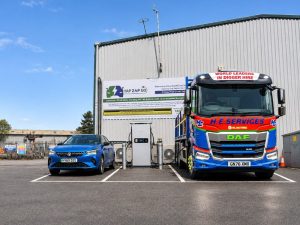
Located on an industrial estate close to the M4 motorway, this charging station also offers space for compatible larger electric vehicles, including electric lorries.
It is a useful charging option for both private motorists and commercial vehicle operators travelling through Berkshire.
Find out more about ultra-rapid EV charging near Membury Services.
Supporting Winter EV Charging With Renewable Solar Energy
At Tap Zap Go, our commitment to electric motoring goes beyond providing affordable public charging.
We have also invested in solar panels installed on buildings we own across the UK. These installations generate renewable electricity to support our wider EV charging operations.
Although solar panels generally produce less electricity during winter due to shorter daylight hours, they can still generate electricity on cold and cloudy days.
In fact, solar panels rely on light rather than heat to generate electricity.
By installing solar panels across our property portfolio, we can make better use of existing rooftop space while investing in renewable energy generation.
Although individual charging sessions may receive electricity through the grid, our solar installations form an important part of our wider renewable energy strategy.
Our aim is to support the transition towards cleaner transport while keeping public EV charging competitively priced for drivers across the UK.
Frequently Asked Questions About Heating in an Electric Car
Does turning on the heating drain an electric car battery?
Yes, cabin heating uses electricity from the vehicle’s battery while driving. However, the amount consumed depends on the heating system, outside temperature, cabin temperature and journey length.
Are heated seats more efficient than cabin heating?
Heated seats can often use less electricity because they warm passengers directly rather than heating the entire cabin. However, actual electricity consumption varies between vehicles.
Does heating in an electric car work immediately?
Many electric cars can begin warming the cabin without waiting for an engine to reach its operating temperature. However, the time required to warm the interior depends on the vehicle and outside conditions.
Does an electric car use more battery on short winter journeys?
Electric cars can use more electricity per mile on short winter journeys because the heating system may need to warm a cold cabin each time. On longer journeys, the initial heating demand is spread across a greater distance.
Can a heat pump help improve electric car range?
Yes, a heat pump can often reduce the amount of electricity required to heat the cabin compared with a conventional electric resistance heater. However, its effectiveness depends on the vehicle and outside temperature.
Should I turn off the heating to save battery range?
No, you should never compromise your comfort, concentration or visibility simply to preserve battery range. Instead, use efficient heating settings, precondition your vehicle when possible and plan suitable charging stops.
Stay Warm and Keep Moving With Tap Zap Go This Winter
Although using the heating in an electric car can reduce its driving range, there are plenty of ways to manage electricity consumption without sacrificing comfort.
Preconditioning your vehicle, using heated seats and choosing sensible climate control settings can all help improve efficiency during colder weather.
Furthermore, planning your charging stops and choosing an affordable public charging network can help keep your winter driving costs down.
At Tap Zap Go, we are helping electric vehicle drivers keep moving with ultra-rapid EV charging for just 49p per kWh, alongside our investment in renewable solar energy.
So, whether you are travelling through Medway, Castleford or passing near Membury Services in Lambourn Woodlands, why not stop by one of our charging stations this winter?
Stay warm, recharge your electric vehicle and enjoy the journey with Tap Zap Go.
Discover affordable ultra-rapid EV charging with Tap Zap Go today.
All information known to be correct at time of publishing on 26th November 2026.