Electric vehicle (EV) charging is evolving faster than ever. At Tap Zap Go, we believe the breakthroughs in battery technology will reshape the way drivers recharge their cars, and in turn reshape charging networks. In this article, we explore how future developments in EV batteries will influence the demands, opportunities, and design of EV charging infrastructure.
The Pressure for Better Batteries
The current generation of lithium-ion batteries has served the EV market well, but its limitations are clear. Energy density, charging speed, longevity, cost, raw material supply, safety, and recyclability still pose serious challenges. Automakers, materials scientists, and startups are pushing hard to overcome these constraints. Some of the most promising directions include solid-state batteries, silicon or lithium metal anodes, and new cathode chemistries (for example high-nickel, cobalt-reduced or cobalt-free formulas). Solid-state batteries promise safer performance, higher energy density, and faster charging rates because they replace liquid electrolytes with solid ones. Silicon or lithium metal anodes can store far more lithium ions per unit weight than the graphite used today, although they face issues with stability, dendrite growth, and cycle life. Advances in cathode materials may allow cells to hold more energy without excessively increasing cost or weight. Together, these improvements could push battery energy densities to levels that enable longer ranges and higher power tolerance. As battery performance improves, carmakers will present EVs capable of ultrahigh charging speeds and extended driving ranges. At Tap Zap Go, we see that these trends will lead directly to transformed expectations from users of EV charging networks.Faster Charging, Higher Demand
One of the most striking changes will be in charging speed. If future batteries can safely accept charging at, say, 500 kW or more, then EV charging stations will need to adapt. Today’s ultra-fast chargers often offer 100–350 kW; tomorrow’s networks will need to support super ultra-rapid charging at much higher power levels to prevent bottlenecks. This shift means that stations must contend with greater power delivery, more robust cooling, stronger grid connections, and thermal management systems. Charging infrastructure operators will need to invest in upgrades to cables, substations, and local distribution networks. The ramping time, how fast a charger can be brought from idle to high power, will become a competitive factor. Users will expect near-instantaneous high throughput. At the same time, as range fears diminish, more drivers may adopt EVs for longer journeys, increasing the load on highway charging hubs, rest area chargers, and “fast-fill” service stations. The peak demand periods may intensify, so infrastructure must scale to avoid congestion or long wait times. That intensification, in turn, demands careful site planning, queuing logic, dynamic load control, and perhaps energy buffering (e.g. local battery storage at charging stations).Grid Implications and Energy Management
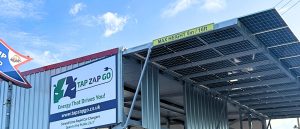
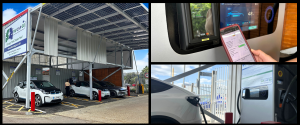
With more powerful charging stations required by future batteries, EV charging infrastructure must coordinate more closely with the energy grid. Ultra-rapid chargers will impose heavy instantaneous loads. Too many such loads without coordination could stress local substations, transformers, and the upstream network. Thus, smart control systems, demand response, and load-balancing strategies will become essential. Charging stations may integrate energy storage (on-site batteries) or on-site renewable generation (like solar) to buffer fluctuations and reduce grid strain. They may draw power from the grid more slowly during low-demand moments and “charge up” the station’s local buffer for brief surges. As we at Tap Zap Go already use solar power at our Strood location, we foresee that future EV charging hubs will increasingly hybridise: combining grid supply, renewables, local battery storage, and dynamic control to deliver high-power charging without destabilising the grid. Moreover, networked charging stations will share data with grid operators to anticipate demand, prevent overloads, and optimise energy flows across regions.Impact on Charger Design and Business Models
As batteries become more tolerant of high currents, charger design must evolve. Chargers will need more sophisticated cooling systems (liquid, immersion, or advanced air cooling) to manage thermal loads. Power electronics must become more compact, efficient, and resilient. Cable design and connectors may evolve (perhaps active cooling in cables or connectors integrated with intelligent electronics) to support higher currents without excessive heating. Because the cost of upgrading or replacing chargers will be substantial, business models may shift toward modular charger units or “upgradeable” infrastructures. A site operator might begin with mid-range chargers and later plug in extra high-power modules. Alternatively, operators may adopt leasing or shared investment models to spread upgrades over time. Charging networks may also adopt dynamic pricing more aggressively, charging higher rates at peak times or for highest power draws. Pre-booking of charging slots may become more common to manage demand. Subscription or membership models might include priority access to ultra-high power units. At Tap Zap Go, we focus on simplicity (tap your card, no app) but we are watching closely how user expectations will evolve as higher power charging becomes standard.Range Anxiety Vanishes, Recharging Anxiety Arrives
As battery ranges stretch toward 600–800 miles (or more in ideal conditions), and battery lifespans improve, range anxiety will largely evaporate. Users will begin to evaluate charging convenience, reliability, location, and cost as their primary concerns. EV charging infrastructure must become as ubiquitous and hassle-free as petrol stations once were. Drivers with advanced battery packs will expect to stop for only a few minutes to top up, like filling a tank today. That means charging spots must be even more reliable, accessible, and fast. Station downtime, malfunctioning plugs, or slow speeds will frustrate users. Maintenance, uptime guarantees, and redundancy in networks will be critical. Given that, EV charging operators who build networks now with future scalability in mind will gain a competitive edge. Tap Zap Go aims to be ahead of that curve, ensuring that our infrastructure can evolve to support future battery standards and charging expectations.The Role of Standardisation and Interoperability
A major obstacle to seamless future EV charging lies in the fragmentation of standards, connectors, protocols, and communication systems. As battery and charger technologies evolve, industry consensus on connector types, safety protocols, and handshaking routines will be vital. No driver wants to worry whether their car is compatible with the charger. The adoption of universal or multi-standard connectors will ease that friction. The evolution of communication protocols (for instance, vehicle-to-charger negotiation of charging curves, real-time diagnostics, and even battery health monitoring) will enhance performance and safety. Operators must build future-proofed systems capable of supporting new standards as batteries and charging tech advance. Tap Zap Go is committed to interoperability, anticipating that our charging stations will need to support future connectors and protocols. We design infrastructure with upgrade paths and flexibility built in.Regional Variations and Deployment Strategies
Battery advancement and charging evolution will not unfold uniformly everywhere. Urban, suburban, rural, and highway contexts impose different constraints. In cities, space is limited and grid infrastructure may be weaker, so local storage, smart load control, and distributed charging (on-street, lamppost chargers, apartment blocks) will be key. In contrast, highways and travel corridors will demand ultra-rapid corridors with high throughput. Tap Zap Go’s deployment strategy must adapt to each scenario. In Kent we focus on ultra-rapid hubs (e.g. 120 kW CCS2 at Strood) to serve through traffic. The battery improvements of the future will push drivers to expect faster charging in such settings. Thus, even “smaller” chargers will need to evolve to handle higher power or smart buffering.Environmental and Lifecycle Considerations
Next-generation batteries must not only advance in performance but also in sustainability. That includes reducing reliance on rare or problematic materials (cobalt, nickel, lithium), increasing recyclability, and minimising environmental impact during manufacturing and disposal. How batteries age, how they degrade, and how second-life applications (e.g. recycling or repurposing for stationary storage) develop will influence charging strategies. If battery packs degrade more slowly, drivers may push to higher states of charge more often (which challenges charging station thermal design). If battery materials become more circular, the economics of battery replacement and recycling interplay with the total cost of EV ownership. Charging operators must plan for that lifecycle. For example, stations might integrate battery recycling services, or partner with second-life energy storage providers. Tap Zap Go is monitoring battery life trends and aims to integrate sustainable practices into our operations where it is appropriate to do so.The Transition Phase: Opportunities and Challenges
We are in a transitional era. Current EVs with today’s battery tech will coexist with next-generation models for a long time. Charging networks must serve both generations efficiently without overbuilding too early or falling behind. That balancing act is delicate. Upgrading grid connections, scaling power delivery, and deploying modular infrastructure will require significant capital investment. Regulators and utilities will need to support those upgrades. Policy incentives, subsidies, and standards will matter. Charging operators will need to adopt agile strategies, pilot emerging technologies, and adjust to user behaviour. Tap Zap Go’s vision is to remain flexible and future-ready. We already operate ultra-rapid chargers powered by solar in Strood, offering simplicity and reliability. We aim to scale that model into broader regions, maintaining a stable network that can adapt to battery advancements.How Tap Zap Go Fits into the Future of EV Charging
At Tap Zap Go, we see the future where drivers expect ultra-rapid, reliable, solar-powered, and universally compatible charging. We recognise that battery improvements will demand higher throughput, smarter energy management, and modular, upgradeable infrastructure. Our approach emphasises user simplicity (tap card, no fuss), renewable integration, and forward compatibility. We are building charging hubs that can evolve rather than become obsolete. We monitor charge curves, thermal performance, grid impact, and user behaviour to iterate continuously. As battery manufacturers push toward solid-state and other high-performance chemistries, we will upgrade our networks accordingly. Our strategy ensures that drivers always find a charging experience that matches the promise of their battery technology. In short, the future of EV charging is tightly bound to breakthroughs in battery science. When batteries can charge faster, last longer, and cost less, charging infrastructure must keep pace. Operators who anticipate those demands will lead the next wave of EV adoption. Tap Zap Go is committed to being part of that wave, delivering clean, convenient, and future-proof charging solutions across the UK. Drivers, fleets, and municipalities that partner with us will benefit from a network designed for tomorrow, even as today’s EVs continue to charge reliably. The road ahead is electric, and the future of EV charging is just beginning.Don’t forget to follow us on social media to view our latest EV news and offers:
Facebook: https://www.facebook.com/tapzapgo/
Instagram: https://www.instagram.com/tapzapgo/
LinkedIn: https://www.linkedin.com/company/tap-zap-go/
All information correct as of: 27th October 2025.