At Tap Zap Go, we’re excited by growing discussions around how the Government could make public EV charging more affordable for everyday drivers. Charging costs remain one of the biggest barriers to electric vehicle ownership, especially for people who rely on on-street or destination chargers rather than home wallboxes. Reducing those costs could dramatically accelerate EV adoption across the UK while helping to balance new road taxes planned for the coming years.
The UK is moving quickly towards a zero-emissions future, yet many motorists still hesitate to switch. Price anxiety continues to hold people back, and nowhere is that more visible than when drivers compare home electricity rates with the much higher prices found on public networks. If ministers take action to reduce these disparities, the impact could be transformational for both drivers and the charging industry.
The Hidden Cost of Charging on the Road
For drivers who charge at home, electric motoring already makes strong financial sense. Off-peak tariffs allow many EV owners to travel for just a few pence per mile. That advantage disappears when drivers plug into many public chargepoints, where prices are often three or four times higher. This has created what many now describe as a pavement tax, where people without driveways pay more simply because of where they live.
Urban drivers, renters and those living in flats depend on public EV charging far more than suburban homeowners. Yet they face the highest running costs, which creates an unfair divide in the EV market. This imbalance discourages thousands of potential buyers who would otherwise consider switching to electric.
At Tap Zap Go, we believe EV ownership should be accessible to everyone, not just those with private parking. The success of Britain’s electric future depends on creating a charging system that works for all drivers.
Why Government Policy Is Under Pressure
The Government faces a major challenge as fuel duty revenues fall. As petrol and diesel use declines, billions of pounds that once funded roads, public transport and maintenance will disappear. To fill the gap, ministers are planning new road-use charges for electric vehicles, including a pay-per-mile scheme due later in the decade.
While it makes sense that all drivers contribute to infrastructure costs, these new charges risk slowing EV adoption if they make electric cars less attractive. That’s why policymakers are now exploring ways to reduce other EV costs, with public EV charging sitting at the centre of the debate.
Lowering the cost of charging on the public network would help soften the impact of new taxes while sending a strong signal that the UK remains committed to electrification. Without this kind of balancing measure, some drivers may decide to delay switching or stick with petrol cars for longer.
The Price Gap That Needs Closing
One of the most effective changes would be to align VAT rates for public charging with home electricity. At present, drivers who charge at home pay a much lower rate of VAT than those who use public chargers. That discrepancy alone accounts for a significant chunk of the price difference.
Reducing VAT on public EV charging would immediately make charging cheaper for millions of drivers. It would also make pricing clearer and fairer across the entire charging network. For someone who relies on public chargers every week, the savings could add up to hundreds of pounds a year.
More affordable charging would also encourage greater use of public infrastructure, making investments in new chargepoints more commercially viable. That creates a positive cycle where more drivers use the network, and operators can expand faster.
Infrastructure Is Growing but Costs Still Matter
The UK has made impressive progress in rolling out charging infrastructure. Thousands of new chargers are installed every year, and rapid charging hubs are now appearing on major roads, in supermarkets and in town centres. This expansion has made long-distance electric driving easier than ever.
However, availability alone does not solve everything. If public EV charging remains expensive, drivers will continue to see it as a last resort rather than a convenient option. Price confidence is just as important as charger density.
Drivers need to know that when they plug in away from home, they won’t face an unpleasant surprise at the end of their session. Transparent, affordable pricing helps build trust in the entire charging ecosystem.
Smart Charging and the Future of Energy
Technology is also changing how we think about EV charging. Smart charging systems allow vehicles to draw power when electricity is cheapest or cleanest. Over time, these systems could dramatically reduce energy costs for both home and public charging.
Public charging hubs can also benefit from smart energy management, storing power during low-cost periods and delivering it when demand rises. This makes charging more efficient for operators and more affordable for drivers.
As these systems mature, public EV charging could become more dynamic and responsive, helping to stabilise the grid while keeping prices competitive.
Fairness and Access for Every Driver
Making public charging more affordable isn’t just an economic issue, it’s a social one. Access to transport shapes people’s ability to work, travel and participate in everyday life. If only certain groups can afford to run an electric vehicle, the transition to clean transport risks leaving others behind.
Lower charging costs would make EV ownership more realistic for people in cities, in rented homes and in shared accommodation. These drivers represent a huge portion of the population and must be included in the electrification journey.
At Tap Zap Go, we see public EV charging as a vital part of building a fairer, cleaner transport system. Every new chargepoint should bring us closer to that goal, not reinforce existing inequalities.
What This Means for the EV Market
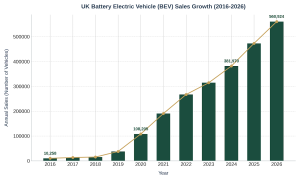
Reducing charging costs would send a powerful message to consumers. It would confirm that the UK is serious about supporting electric drivers through the transition away from fossil fuels. That confidence could boost new EV sales, support the used-EV market and encourage further private investment in charging networks.
Car manufacturers, charging providers and energy companies all rely on strong consumer demand to keep innovating. Affordable public charging helps create the conditions for that growth.
When drivers know they can charge easily and cheaply wherever they go, electric cars become the obvious choice rather than a compromise.
A Turning Point for Britain’s Electric Future
The debate over charging costs comes at a critical moment. The next few years will shape whether the UK meets its climate goals and whether electric vehicles become the dominant form of transport. Public EV charging sits right at the heart of that transition.
If the Government moves forward with policies that lower charging prices, it could remove one of the biggest obstacles holding EV adoption back. That would benefit drivers, businesses and the environment all at once.
At Tap Zap Go, we’re ready to support that shift by providing drivers with the charging network that helps keep Britain moving at a low-cost price. A cleaner future depends on making electric driving simple, fair and affordable, no matter where you plug in.
All information correct at the time of posting on 19th January 2026.